
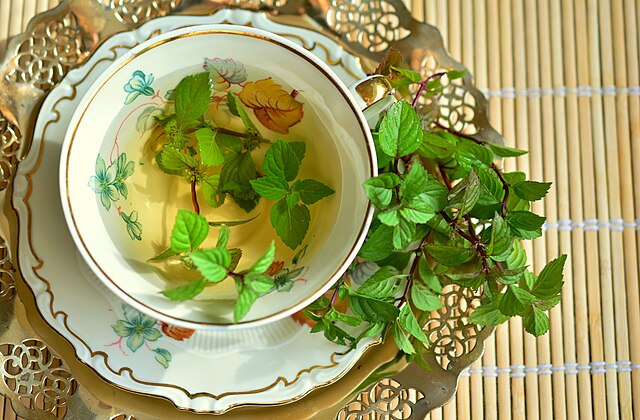
Mint is everywhere – our toothpaste, gum, even cookies and ice cream! That popular flavor actually originates from a family of plants (Lamiaceae) that contains some 7,000 species ranging from lavender to patchouli. What most of us think of as true mint has many subtypes itself (think of all the different mint candies out there!), but the two primary medicinal mints we work with are Spearmint and Peppermint. They can often be used interchangeably but have some key differences so let’s dive in:
Peppermint
Peppermint (Mentha x piperita) is what is often thought of as the quintessential “mint” but it is actually a natural hybrid of watermint and spearmint! It is a native perennial to much of Europe and the Middle East, and has grown wild in North America for centuries. It has a long and rich history of both medicinal and culinary use dating back at least to the ancient Romans and Greeks.
Like all mints, Peppermint is rich in volatile (essential) oils – primarily Menthol – which are largely responsible for its medicinal effects. It offers relief from many stomach complaints including gas pains, nausea, and nonspecific indigestion due to its powerful anti-spasmodic (reducing muscle contractions) and carminative (gas-breaking) qualities. This has led to much modern research and use of Peppermint Oil in enteric-coated capsules for the treatment of a wide range of digestive issues including IBS. The anti-spasmodic property also makes it an effective ally for some types of headache and cough.
Peppermint has a cooling, pleasant flavor, making it a welcome addition to tea for many people, and it combines well with most other herbs. Menthol directly affects receptors in our mouths (and on our skin in topical applications!) to “trick” them into sensing cold. At the same time, Peppermint is diaphoretic (promoting sweat), making it an excellent herb for fevers. Most people experience peppermint as rather stimulating and invigorating for both body and mind.
Finally, Peppermint is safe for general use, even by children, though excessive heavy use may actually cause stomachache so as always practice moderation. Essential oil of Peppermint should never be consumed – it is not the same as the coated capsules!
Spearmint
Mentha spicata has a significantly sweeter flavor and milder scent than peppermint, owing mainly to a much lower menthol content. This also means that it’s less stimulating and therefore often preferred for use in child and evening formulas. Like its sibling, Spearmint is native to much of Europe and the Middle East but naturalized to North America.
While it offers much the same support for digestive ailments, mood, and fevers, spearmint does so in a gentler way. Where peppermint will shock you with coolness from a fever, spearmint will coax the fever down. Where peppermint brings bright alertness, spearmint offers serene uplift.
Spearmint contains high levels of carvone, a chemical also present in caraway seed that offers antimicrobial (fighting off bacteria and fungus), anti-inflammatory, and antioxidant effects. Carvone may also be a part of the reason spearmint has shown great promise in lowering a specific form of testosterone in women with PCOS.
Whichever one you prefer, mint is surely a plant to know and include in your herbal toolkit!
For More Information:
Smile Herb Blogs: Mint
American Botanical Council: Peppermint
American Botanical Council: Peppermint Leaf Monograph
NPR: How Peppermint Tricks Us Into Feeling (Deliciously) Cold
Medicinal Uses, Phytochemistry, Pharmacology, and Toxicology of Mentha spicata
Carvone and its pharmacological activities: A systematic review
Androgen Modulation Through Spearmint Tea: Exploring Effects in PCOS and Non-PCOS Populations
The post Mint, Wonderful Mint! appeared first on Smile Herb School.
